Fabrics for Bags and Accessories: How to Choose the Right Textile Manufacturer
Do you manufacture bags, pouches, wallets, cases or other textile accessories and need a fabric supplier for production?
Finding a fabric for a bag is easy.
Finding a textile manufacturer that can supply the same quality consistently, develop a specific construction and support your production as it grows is a different matter.
For an accessory manufacturer, the outer fabric and lining are part of the final product. They affect cutting, sewing, construction and the final appearance.
Once your requirements reach hundreds of metres, it makes sense to look beyond a fabric retailer or distributor and speak directly to the company that manufactures the textile.
Which companies need fabrics for accessories?
You do not have to be a large handbag brand to need a professional textile supplier.
The market includes:
- Bag manufacturers
- Accessory workshops
- Textile leather goods manufacturers
- Wallet and card holder manufacturers
- Case manufacturers
- Pouch and toiletry bag manufacturers
- Backpack manufacturers
- Textile packaging companies
- Fashion accessory manufacturers
- Cut-and-sew manufacturers
- Promotional product manufacturers
- Small and medium-sized production companies
Many of these businesses may not need thousands of metres.
But they are also not buying a few metres for a personal sewing project.
When a company needs 200, 500 or 1,000 metres, it needs a supplier that understands professional production.
What fabrics can be used for bags and accessories?
The right material depends on the product, its construction and the required finish.
Cotton fabrics
Cotton can be suitable for bags, pouches, cosmetic cases and other textile accessories.
Different constructions can provide different levels of body, softness and appearance.
Technical fabrics
Technical textiles can be useful when the accessory requires specific characteristics such as stability, resistance, light weight or a particular functional performance.
Microfibres
Microfibres can offer a consistent surface and a specific hand feel, with different options for colours and finishes.
Jacquards
For fashion accessories, the textile itself can become part of the design.
Jacquard constructions allow patterns and structures to be incorporated into the fabric itself.
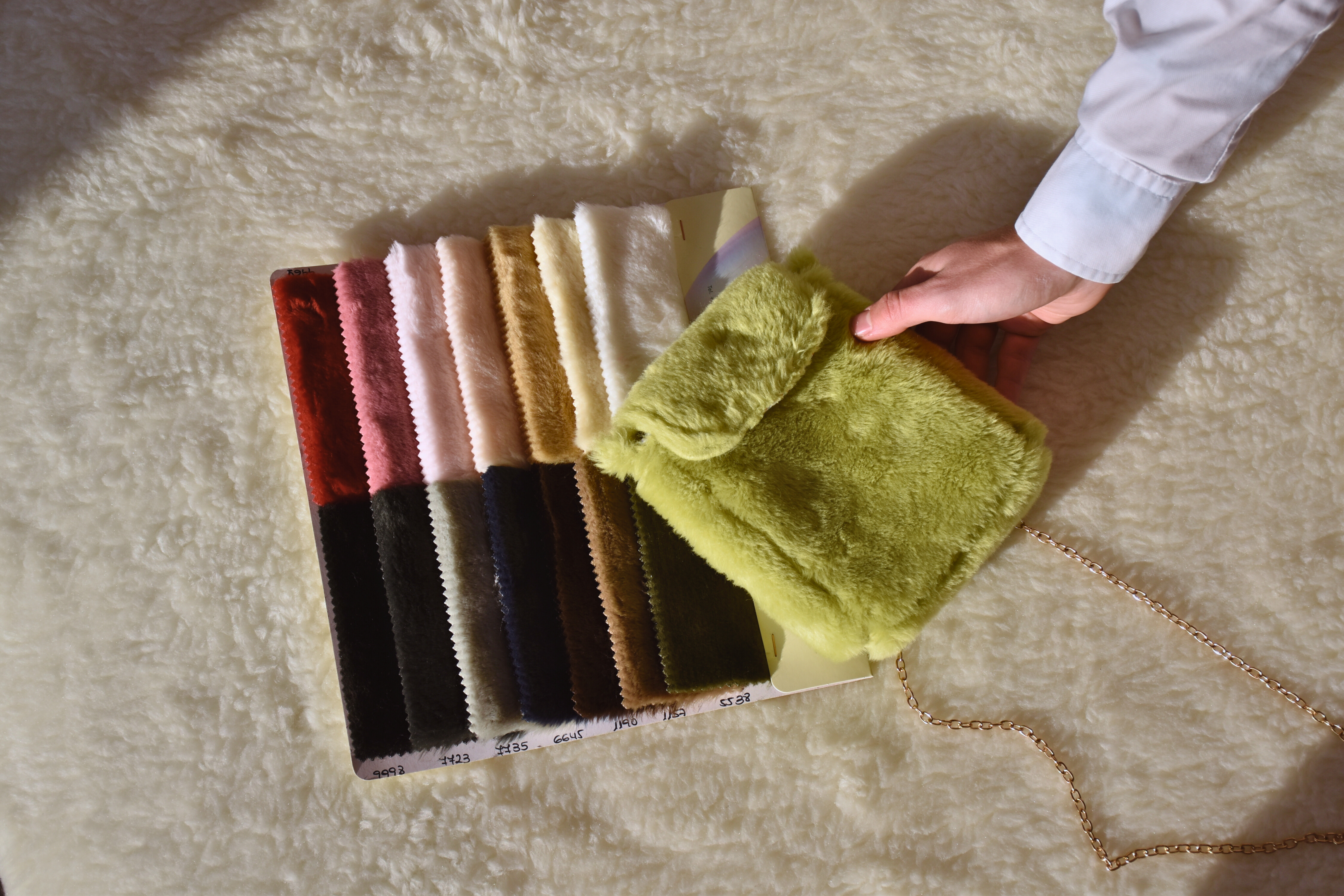
Velvet and pile fabrics
These fabrics can be interesting when touch and appearance are important elements of the finished accessory.
Lining fabrics
The lining is not simply the fabric that goes inside the product.
It can affect construction, sewing, handling and the final perception of the accessory.
For bags, wallets, pouches and cases, the lining should be selected according to the product and manufacturing process.
What should an accessory manufacturer consider when choosing a fabric?
There is no universal fabric for every bag or accessory.
1. The outer fabric
The outer fabric determines much of the appearance of the product, but it also has to perform during manufacturing.
Consider:
- Weight
- Thickness
- Flexibility
- Dimensional stability
- Hand feel
- Cutting behaviour
- Sewing behaviour
- Surface finish
A fabric that looks good as a sample is not automatically the best fabric for production.
2. The lining
The lining should be selected together with the product.
A lining that is too stiff may make certain operations more difficult. One that is too light may not provide the required behaviour.
3. The structure of the accessory
A soft tote bag, a structured case and a small wallet do not necessarily require the same material.
In some products, combining fabric with foam or another material can provide additional body, volume or cushioning.
This is where developing a complete textile construction can be more useful than simply choosing a standard fabric.
Why work directly with a textile manufacturer?
For an accessory manufacturer, the textile supplier can become an important part of the production chain.
When several intermediaries are involved, it can be more difficult to control the origin of the material, reproduce a quality or request a modification.
Working directly with the manufacturer gives you a more technical conversation.
For example:
“We need this appearance, but with more body.”
“We need the same fabric in another colour.”
“The fabric needs to work with our cutting and sewing process.”
“We need the same quality for repeat orders.”
These are conversations that are easier to have with the company actually producing the fabric.
What are the advantages of buying directly from the manufacturer?
Better control over the material
The manufacturer knows how the textile is produced and can work on its characteristics.
Better continuity
If an accessory sells well, you need to reproduce it.
Material continuity becomes important.
Custom development
Not every product can be made with an off-the-shelf fabric.
A specific construction, finish, handle or combination may be required.
Direct technical communication
When a production issue appears, speaking directly with the manufacturer can make it easier to find a solution.
A simpler supply chain
Instead of coordinating several companies, you can work directly with the textile producer.
Do you need to be a large company?
No.
Many professional accessory manufacturers work with small or medium-sized teams and produce for brands, retailers or other companies.
The important factor is not simply company size.
It is whether there is a genuine production requirement.
If your business needs around 200 metres or more per fabric/reference, it may make sense to discuss the project directly with a textile manufacturer.
What should you ask a textile manufacturer before ordering?
Before placing a production order, ask:
- Do you manufacture the fabric yourselves?
- Can you provide samples?
- What are your minimum quantities?
- Can you reproduce the same quality for future orders?
- Can you develop a specific construction?
- What options do you have for outer fabrics?
- What options do you have for linings?
- Can you supply different colours?
- Can you apply finishes or lamination?
- Where is the fabric manufactured?
- What is the approximate production lead time?
Fabrics for bags and accessories manufactured in Spain
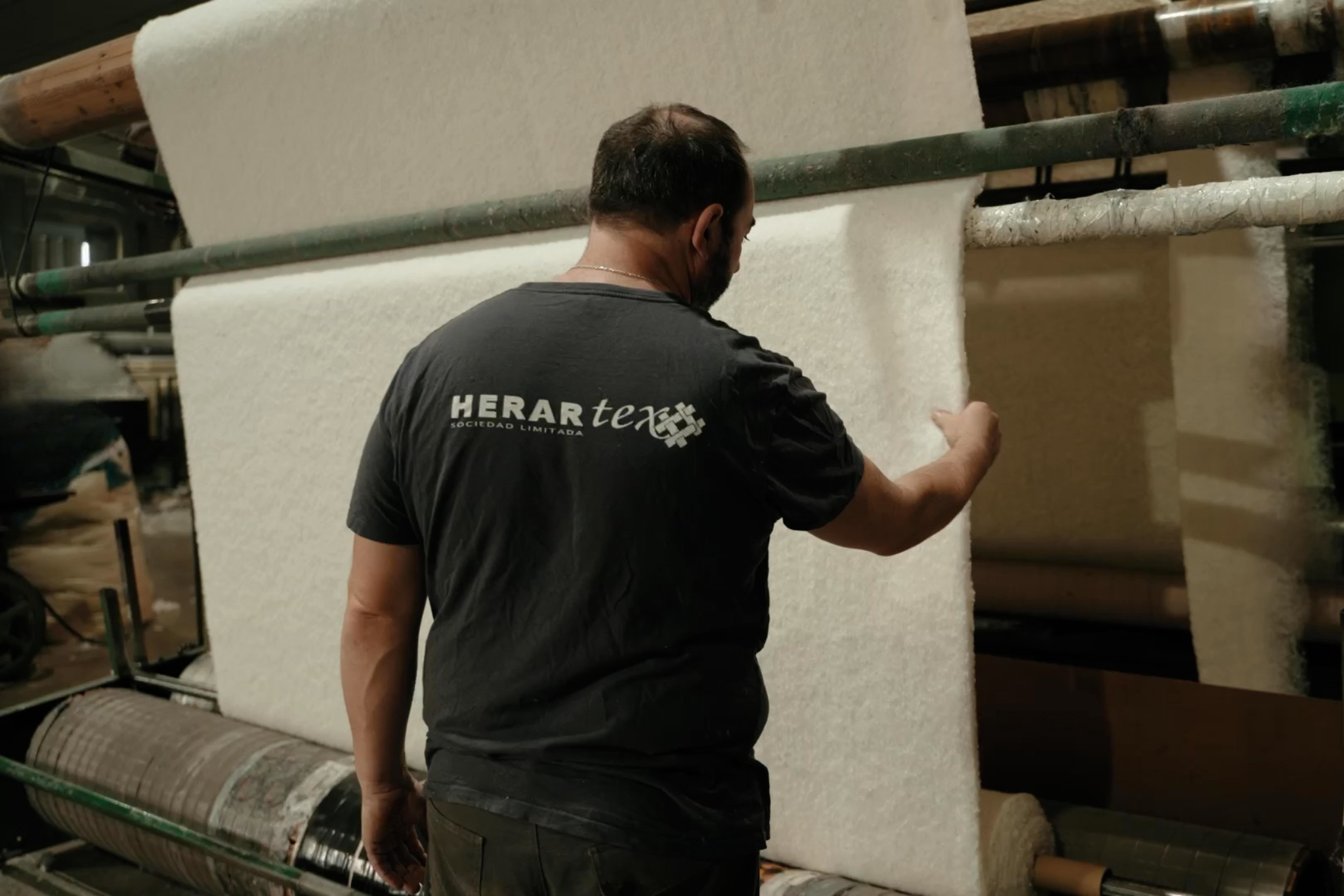
At Textigor, we manufacture textiles in Spain for companies that use them in their own products.
We work with different fabrics, constructions and finishes for fashion, accessories, footwear, furniture and other applications.
For accessory manufacturers, this can include materials for outer surfaces, linings and textile constructions developed around specific production requirements.
We also provide foam lamination and textile bonding solutions when an accessory needs additional body, volume or cushioning.
The advantage is straightforward: instead of buying a standard fabric and looking for another company to modify it, you can discuss the material directly with the manufacturer from the beginning.
Looking for a fabric manufacturer for your accessories?
If you manufacture bags, cases, wallets, pouches, backpacks or other accessories and need a textile supplier for professional production, tell us about your project.
We work with companies in Spain and across Europe looking for fabrics for recurring production.
Tell us what you manufacture, what type of fabric you need and approximately how many metres you require.
We can then look at which textile construction could fit your production.